
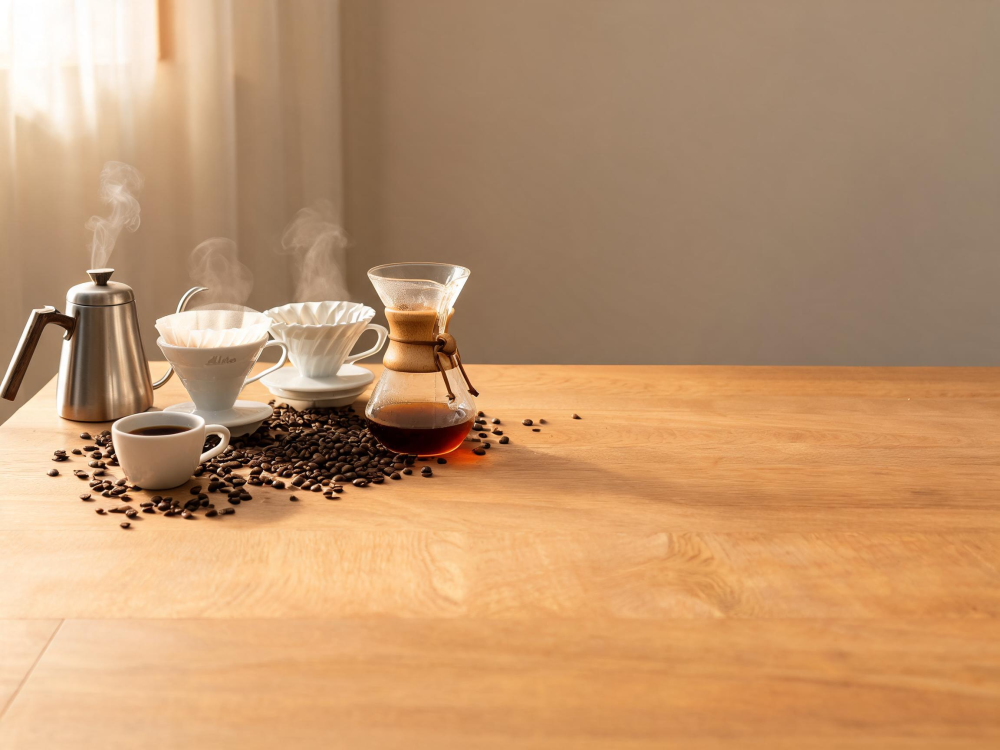
If you choose specialty coffee, you’re looking for more than an average cup, you want a brew where every flavor and nuance shines. But great beans aren’t enough on their own. Using the right brewing method brings balance to the cup and lets those flavors come through as they were meant to.
What are specialty coffee brewing methods?
Specialty coffee brewing methods vary depending on the brewing tool, the level of extraction, and the final flavor in the cup. The most common methods include V60, Chemex, French press, AeroPress, espresso, and Kalita Wave. Each method has its own tools and preparation steps that affect body, clarity, and flavor.
Below, we review the most popular specialty coffee brewing methods, explaining how each tool works, the correct brewing steps, and the essential equipment needed to achieve the best result.
First: Drip brewing methods for specialty coffee
Drip brewing methods, also known as filter coffee, are among the most popular ways to prepare specialty coffee. They rely on hot water passing through ground coffee using a filter and brewing device, which helps extract flavors clearly and in a balanced way. Several well-known methods fall under this category, differing in the shape of the device, flow rate, and filter type, which affects body and final taste. Below, we will explore the specialty coffee brewing methods that fall under drip brewing:
1- V60 specialty coffee brewing
The V60 method is one of the most famous specialty coffee brewing methods. It is a manual pour-over style that gives coffee a clean, clear taste while bringing out delicate flavors and balanced acidity. Many coffee lovers prefer this method because it allows greater control over brewing factors such as grind size, water temperature, and pouring speed.
The V60 uses a cone-shaped dripper with internal ridges that help improve water flow and extract coffee in a balanced way. The pouring technique, coffee-to-water ratio, and brew time all directly affect the final cup.
V60 tools
To brew specialty coffee using V60, you will need the following tools:
- V60 dripper.
- Suitable paper filter for the size
- Specialty coffee ground medium, leaning slightly fine.
- Digital scale.
- Gooseneck kettle.
- Hot water.
- Cup or server.
- Timer for brew time.
I recommend buying the V60 coffee kit, which is also suitable for travel.
How to brew V60 specialty coffee
- Place the paper filter inside the V60 dripper, then rinse it with hot water to remove any paper taste and warm the dripper and cup.
- Add the ground coffee to the filter, then gently level the coffee bed.
- Start by pouring a small amount of hot water over the coffee to fully saturate it, then let it bloom briefly.
- Continue pouring slowly in steady circular motions until you reach the desired water amount.
- Wait until the coffee has fully dripped into the cup, then serve immediately.
The right ratio
A common ratio for V60 is 15 to 18 grams of coffee for about 250 ml of water. You can adjust this ratio to taste: if you prefer a lighter cup, increase the water slightly; if you want a more concentrated flavor, increase the coffee amount.
What makes V60 special?
This method gives you a very clear cup, making the differences between beans and harvests more noticeable than with some other methods. It is also ideal for those who prefer a clean and relatively light coffee, with a strong ability to highlight floral, fruity, and citrus notes.
Tips for success
- Use a balanced grind, because a grind that is too fine may slow extraction and increase bitterness, while a grind that is too coarse may make the coffee too weak.
- Pour water gently and in consistent intervals.
- Keep a fixed coffee-to-water ratio.
- Use water at an appropriate temperature.
- Take notes with each brew to find the recipe that suits your taste best.
2- Chemex brewing
Chemex is one of the most popular specialty coffee brewing methods for lovers of clean, light coffee. It is a filtration method that uses a thicker paper filter than many others, which produces a smooth cup with clear flavors and a lighter body. Many people also prefer it when brewing more than one cup at a time, because it combines elegant presentation with easy serving.
Chemex uses a glass vessel that serves as both the brewing device and the serving server. The filter is placed in the top section, ground coffee is added, and water is poured gradually over it. Grind size, water temperature, pouring method, and brew time all affect the final result, so this method requires care and calm during brewing.
Tools used
- Chemex brewer.
- Chemex paper filter.
- Specialty coffee ground medium.
- Digital scale.
- Gooseneck kettle.
- Hot water.
- Timer.
Brewing method
- Place the paper filter in the Chemex correctly, then rinse it with hot water to remove any paper taste and warm the vessel.
- Add the ground coffee inside the filter, then gently level the coffee bed.
- Start by pouring a small amount of water to saturate the grounds, and let it bloom briefly.
- Continue pouring water in steady batches with calm circular motions.
- After filtration is complete, remove the filter and serve the coffee immediately.
What makes it special?
Chemex produces a very clean cup by reducing oils and sediment, making it ideal for those who prefer light coffee with a clean taste. It is also a good option when serving several people at once.
3- Kalita Wave brewing
Kalita Wave is one of the most well-known pour-over methods in specialty coffee. It features a flat-bottom design with three holes at the base, which helps water flow evenly and creates balanced extraction. It is suitable for those who want a clean cup with clear flavors and a medium, consistent body.
Kalita Wave uses a dedicated paper filter placed inside the brewer, then ground coffee is added and hot water is poured gradually over it. Grind size, water temperature, pouring method, and extraction time all affect the final result, making it a practical method that offers good control over taste.
Tools used
To brew specialty coffee with Kalita Wave, you will need:
- Kalita Wave brewer.
- Dedicated paper filter.
- Specialty coffee ground medium, leaning slightly fine.
- Digital scale.
- Gooseneck kettle.
- Hot water.
- Cup or server.
- Timer.
Brewing method
- Place the paper filter inside the Kalita Wave brewer, then rinse it with hot water to remove any paper taste and warm the device.
- Add the ground coffee to the filter, then gently level the coffee bed.
- Start by pouring a small amount of water to fully saturate the coffee, and let it bloom for a few seconds.
- Continue pouring in steady batches and calm motions until you reach the desired amount.
- Let the coffee finish dripping, then serve immediately.
The right ratio
A common ratio for Kalita Wave is 15 to 18 grams of coffee for about 250 ml of water. This ratio can be adjusted depending on the desired strength: more water gives a lighter cup, while more coffee gives a clearer and more concentrated flavor.
What makes Kalita Wave special?
Kalita Wave produces a balanced and smooth cup while reducing the effect of small pouring mistakes compared with some other drip methods. Its flat-bottom design also helps create a more even extraction, making it a suitable choice for beginners and for those seeking consistent results.
Tips for success
- Use an even and suitable grind.
- Pour water gently and in batches.
- Keep a fixed coffee-to-water ratio.
- Try different grind sizes or water amounts to find the result that suits you best.
Browse the filter coffee collection, or you can purchase the special Microlot filter coffee box.
Second: Espresso brewing
Espresso is one of the most popular specialty coffee brewing methods and is especially favored by certain coffee enthusiasts. It is one of the most widespread methods in cafés and works by forcing hot water under high pressure through finely ground coffee in a short time. This produces a small cup, but one that is concentrated in flavor and body, with a distinctive creamy layer known as crema.
Espresso differs from drip methods because it does not rely on slowly pouring water over the coffee, but rather on fast extraction under pressure. For this reason, it requires greater precision in grind size, dose, pressure, and temperature in order to achieve a balanced and cohesive result.
Espresso tools
To prepare specialty coffee with espresso, you will need:
- Espresso machine.
- Suitable coffee grinder.
- Specialty coffee ground fine.
- Portafilter.
- Tamper.
- Digital scale.
- Timer.
Brewing method
- Grind the coffee to the proper espresso setting.
- Place the grounds in the portafilter and distribute them evenly.
- Tamp the coffee while keeping the surface level.
- Lock the portafilter into the machine and start extraction.
- Monitor the extraction time and output amount, then serve immediately.
The right ratio
The ratios used in espresso vary depending on the bean and the desired style, but the key is achieving balance between the amount of coffee and the amount of beverage produced. Success depends more on controlling dose, time, and grind than on water quantity alone.
What makes espresso special?
Espresso delivers a concentrated flavor and rich body, revealing coffee details in a small shot. It is also the base for many popular drinks such as latte, cappuccino, and mocha, making it one of the most important methods in specialty coffee.
Tips for success
- Use a fine, consistent grind.
- Distribute the grounds well before tamping.
- Maintain steady pressure while tamping.
- Watch the extraction time carefully.
- Adjust the dose or grind until you reach the perfect result.
Explore Microlot’s espresso coffee collection, or order the special espresso box and don’t miss the chance.
Third: Infusion brewing
Infusion, or steeping, is a specialty coffee brewing method that relies on keeping the ground coffee in contact with water for a specified period before separating them. It is used to produce a relatively rich cup with a clearer flavor than some drip methods.
Infusion differs from drip brewing in that the water does not pass through the coffee immediately, but instead stays with it long enough for the extraction to complete. This is why the method requires control over steeping time, grind size, and water temperature to achieve balance.
Tools used
To brew specialty coffee using infusion, you will need:
- French press or a similar steeping device.
- Specialty coffee is ground relatively coarsely.
- Hot water.
- Digital scale.
- Timer.
- Spoon for stirring if needed.
Brewing method
- Add the ground coffee to the brewer.
- Pour hot water over the coffee in the proper ratio.
- Stir gently if needed to ensure full saturation.
- Let the coffee steep for the required time.
- Separate the grounds from the drink by pressing or filtering, then serve immediately.
The right ratio
A common ratio for immersion brewing is a balanced amount of coffee and water, with the ability to adjust based on the desired strength. The longer the steeping time or the finer the grind, the stronger and denser the flavor becomes.
What makes infusion special?
This method is relatively easy and suitable for home brewing, while also offering a fuller body than some paper-filter methods. It is ideal for those who prefer a more rounded cup with less sharpness in mouthfeel.
Tips for success
- Use a grind suitable for immersion brewing.
- Do not steep for longer than necessary.
- Keep a fixed ratio between coffee and water.
- Adjust steep time and grind size to reach your preferred taste.
You have now learned the most important specialty coffee brewing methods. All that remains is to choose specialty coffee beans that suit your preferred method, and do not forget to explore specialty coffee brewing tools from Microlot.