
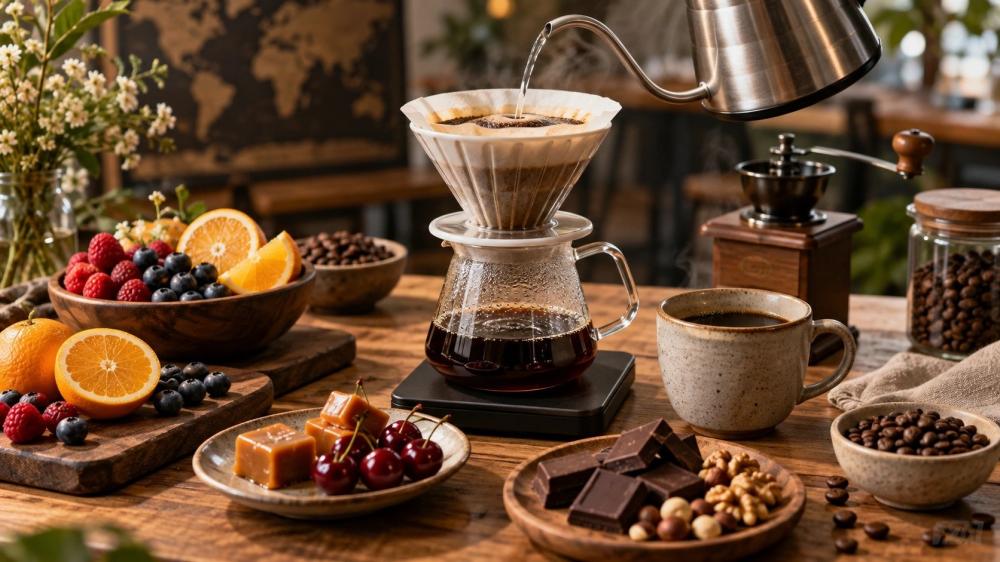
The best coffee for V60 varies by origin, variety, processing and roast level, so each coffee can give you a completely different experience, from florals and citrus to chocolate and caramel. Microlot Roasters offers specialty coffee lovers in Saudi Arabia a range of pour-over coffees to help them choose the right flavors and brew a balanced cup at home or at work.
V60 is one of the most popular manual pour-over brewers because it gives you great control over grind, water temperature, pouring speed and extraction time. In return, it reveals subtle differences between coffees, which makes choosing fresh, suitable beans essential.
Which Coffees Are Best for V60?
Options can be grouped by the taste you want:
- Ethiopian coffee: florals, citrus, berries and fruit.
- Colombian coffee: sweetness, balance, fruit and caramel.
- Brazilian coffee: chocolate, nuts and a full body.
- Washed coffee: a clean, clear cup.
- Natural coffee: more sweetness and ripe fruit flavors.
- Anaerobic coffee: a bold, complex experience.
- Light roast: to show origin details and acidity.
- Medium roast: to balance sweetness and body.
No single coffee is best for everyone; the right choice depends on your taste, brewing method and the result you want in the cup. For a broader guide, see the best coffee beans for pour-over.
What Is V60 Coffee?
V60 originally refers to a cone-shaped dripper with a 60-degree angle, a large opening at the bottom and internal ridges that guide water through the coffee. It needs a paper filter, the right grind and a steady pouring technique.
So "V60 coffee" means any coffee you brew with this dripper, not a separate type of bean. You can use Ethiopian, Colombian, Brazilian or other coffees, as long as the roast and grind suit pour-over.
V60 coffee is known for:
- A clean cup with little sediment.
- Clear aromatic notes.
- Control over coffee strength.
- Easy experimentation with recipes.
- Highlighting differences between coffees and processes.
- Suitability for hot and iced pour-over.
Browse the filter coffee section to compare available coffees before ordering.
Top Origins for V60 Coffee
V60 coffee is shaped by where the beans were grown, farm altitude, soil, climate and variety. Coffees from the same country aren't all alike; region, processing and roast can make two very different. Still, each origin's traits help you form a first impression of the flavors to expect.
Ethiopian Coffee for Floral and Fruity Flavors
Ethiopian coffees are a favorite for lovers of light, aromatic coffee. Many Ethiopian regions are known for notes of jasmine, bergamot, lemon, peach, berries and tropical fruit.
Ethiopian coffee suits those who:
- Drink coffee without milk or sugar.
- Love clear, balanced acidity.
- Prefer a light body and clean finish.
- Enjoy discovering complex flavors.
- Want aromatic coffee, hot or iced.
Browse Ethiopian coffees and compare tasting notes and processing on each product page. Learn more about Ethiopian coffee types.
Colombian Coffee for Sweetness and Balance
Colombian coffees are among the most versatile for V60, offering classic notes such as caramel and chocolate, or fruity ones such as grape, pineapple, berries and citrus, depending on region, variety and processing.
Colombian coffee suits beginners because it usually balances sweetness, acidity and body without any one dominating, and it suits advanced drinkers too with bold natural or anaerobic coffees.
Explore Colombian coffees and choose a balanced everyday coffee or a fruity one for something special. See also Colombian coffee varieties.
Brazilian Coffee for Chocolate and Nuts
If you prefer relatively low acidity, Brazilian coffees may be the best V60 choice for you. They're often known for notes of chocolate, caramel, hazelnut, almond and dried fruit, with a fuller body than some African coffees.
Brazilian coffee is a great choice if you're moving from traditional coffee or espresso to pour-over, as its flavors are familiar and easy to enjoy. Pair it with a dessert or chocolate for a complete experience.
See Brazilian coffees, or try Brazil Chocolate with notes of chocolate and caramel, checking price and availability before ordering.
How Processing Shapes Flavor
Choosing an origin isn't enough; how the beans are separated and dried after harvest strongly affects taste. Different processing can turn two coffees from the same region into very different experiences. The most common methods:
- Washed.
- Natural (dry).
- Honey.
- Anaerobic.
- Experimental and infused.
Read our full guide to coffee processing methods.
Washed Coffee for a Clean, Clear Cup
Washed coffees are ideal for tasting origin characteristics clearly. The skin and pulp are removed, then the beans are washed before drying, with steps varying between farms and washing stations.
The result is usually a clean cup with defined acidity and easy-to-distinguish flavors. Washed coffees suit V60 and Chemex, especially for lovers of citrus, florals, tea-like notes and light fruit.
Explore washed coffees and choose by your favorite notes.
Natural Coffee for Sweetness and Fruit
In natural processing, the cherries are dried before the beans are removed, which can transfer more sweetness and fruit flavor. You may taste:
- Strawberry and berries.
- Grape and dried fruit.
- Peach and apricot.
- Pineapple and mango.
- Chocolate and ripe fruit.
Some naturals need careful grind and temperature adjustments so the flavor doesn't become heavy or overly fermented. Start with moderate temperature, then adjust.
See what's available in natural coffees.
Anaerobic Coffee for Something Different
Anaerobic processing suits those looking for bold, complex V60 coffees. Coffee is fermented in a sealed, low-oxygen environment, which can create strong notes of tropical fruit, candy or spice.
When buying an anaerobic coffee for the first time:
- Choose a trial-size bag before buying a large amount.
- Read the tasting notes carefully.
- Use slightly cooler water if the flavor seems too intense.
- Try a 1:16 ratio as a starting point.
- Avoid excessive agitation while pouring.
- Note your successful recipe.
Compare anaerobic coffees with infused coffees to choose an experience that suits your taste.
What Roast Level Is Best for V60?
Roast directly affects V60 flavor and ease of extraction. Light or medium roasts usually highlight a coffee's character, while dark roasts add roasty flavors and more bitterness.
Light Roast
Shows florals, fruit, acidity and origin character, but may need a slightly finer grind or hotter water for balanced extraction.
Medium Roast
Offers clearer sweetness and body with calmer acidity, a practical choice for beginners or a balanced daily cup.
Dark Roast
Brings dark chocolate, spice and roast notes, and may need cooler water and a coarser grind to avoid excess bitterness. More in our roast levels guide.
Choose Coffee by Your Taste
The best way to choose a V60 coffee is to start with tasting notes, not the country name:
- Florals and citrus: light-roast washed Ethiopian.
- Berries and ripe fruit: natural Ethiopian or Colombian.
- Sweetness and balance: washed or natural Colombian.
- Chocolate and nuts: medium-roast Brazilian.
- Bold flavors: anaerobic or infused.
- A clean, light cup: washed coffee.
- Body and high sweetness: natural coffee.
If you're unsure, try several coffees with the same recipe. Browse coffee boxes or new arrivals.
A Practical V60 Recipe
Ingredients and Tools
- 15 g of coffee beans.
- 250 g of water.
- A V60 and suitable filter.
- A burr grinder (see the best grinders for V60).
- A digital scale and timer.
- A gooseneck kettle.
- A cup or server.
Brewing Steps
- Heat water to 90–94°C.
- Rinse the paper filter with hot water and discard the rinse water.
- Grind 15 g medium, slightly toward fine.
- Add the coffee and level the bed.
- Pour about 45 g of water to bloom.
- Wait 30–45 seconds.
- Keep pouring gradually in stages up to 250 g.
- Aim for a total brew time of about 2:30–3:30 minutes.
- Swirl gently and wait a moment before tasting.
Get your brewing tools from coffee tools, checking size and stock before ordering. Need a complete setup? See our V60 coffee kit guide.
How to Dial In Your Grind
Different V60 coffees can behave differently at the same grind setting, because bean density, roast and processing affect flow rate. Adjust by taste:
- Sour and weak: grind slightly finer.
- Bitter and dry: grind coarser.
- Water drains too fast: grind finer.
- Slow drawdown or clogged filter: grind coarser.
- Good flavor but too light: add more coffee or use less water.
- Strong and balanced but heavy: add a little more water.
Don't change grind, temperature and ratio together. Change one variable at a time so you know what improved or worsened the result.
Why Water Matters for V60
Even the best coffee can taste weak with the wrong water. Water makes up most of your drink, so its cleanliness and mineral content affect extraction.
- Use drinkable water free of odors.
- Don't rely on distilled water alone; it lacks the minerals needed for extraction.
- Avoid very hard or salty water.
- Keep the temperature as steady as possible.
- Use the same water when comparing coffees.
- Start with 1 g of coffee per 16 g of water.
For light roasts, try hotter water. For medium or dark roasts that taste bitter, lower the temperature gradually.
Buying V60 Coffee in Saudi Arabia
Before buying, check the product page for:
- Country and region of origin.
- Variety and growing altitude.
- Processing method.
- Tasting notes.
- Roast level.
- Bag size.
- Whole bean or ground options.
- Price and availability.
- Roast date on delivery.
- Shipping policy for your city.
The Microlot store lets you browse all coffees and order coffee and tools online. Review the shipping and delivery policy before checking out.
Mistakes That Affect V60 Flavor
- Using old or poorly stored coffee.
- Grinding a lot of coffee long before brewing.
- Not rinsing the paper filter.
- Pouring too fast or randomly.
- Using a grind that's too fine or too coarse.
- Not weighing coffee and water.
- Using boiling water for every coffee.
- Changing several variables between brews.
- Storing the bag near heat or humidity.
- Buying more than you'll drink.
Keep beans in their sealed bag away from light and heat, and grind right before brewing.
Order the Right V60 Coffee for Your Taste
Choosing the best coffee for V60 depends more on the flavor you love than on a coffee's fame. Choose Ethiopian for florals and fruit, Colombian for balance and sweetness, or Brazilian for chocolate and nuts, then pick the processing and roast that match the experience you want.
Browse Microlot's coffees at Microlot, choose your bag and add the pour-over tools you need to one cart. For help finding the coffee closest to your taste, contact +966 56 666 6361 or [email protected].