
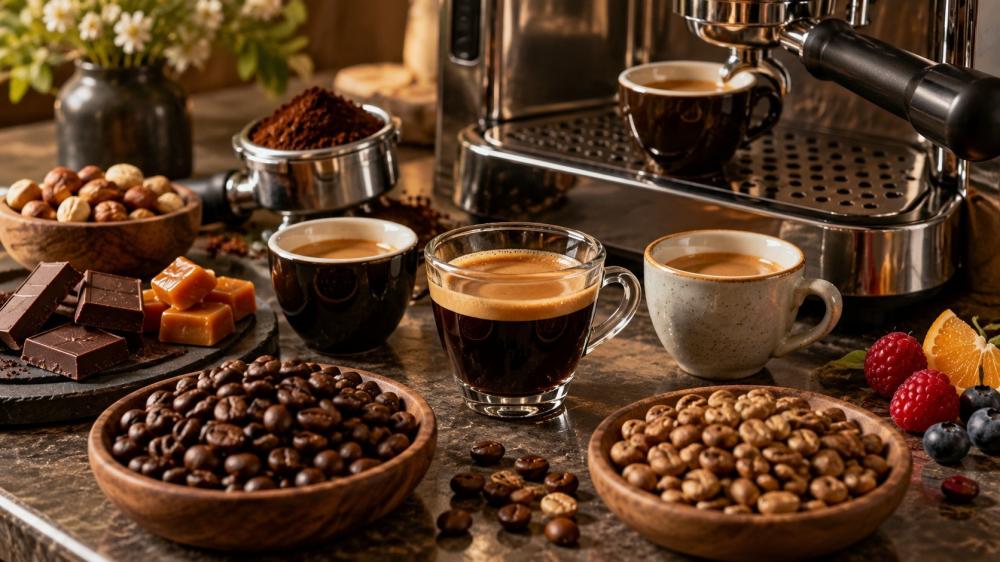
Choosing the best espresso coffee beans depends on the flavor you prefer, your espresso machine and how you serve your drink, whether you enjoy espresso on its own or use it for cappuccinos and lattes. Microlot Roasters offers a wide range of specialty coffees for espresso, from chocolate-rich Brazilian coffees to floral, fruity Ethiopian ones.
Espresso isn't a specific type of bean; it's a brewing method that forces hot water through ground coffee under high pressure. That's why you can brew it with many different coffees, as long as you choose the right roast, grind and recipe.
What Is the Best Coffee for Espresso?
Decide based on the result you want:
- Choose Brazilian coffee for chocolate, nuts and a full body.
- Choose Colombian coffee for sweetness, balance, caramel and fruit.
- Choose Ethiopian coffee if you enjoy florals, citrus and berries.
- Choose an espresso blend for consistent, easy-to-dial results.
- Choose a single origin to taste a specific region or farm.
- Choose a medium roast to balance sweetness and acidity.
- Choose a medium-dark roast for milk drinks and a stronger body.
Start from the espresso coffee section and compare coffees by tasting notes, processing and roast level.
What Makes Coffee Good for Espresso?
The best espresso beans balance sweetness, acidity, bitterness and body when extracted under pressure. A bag labeled "espresso" doesn't contain botanically different beans, but it may be roasted to make extraction in an espresso machine easier.
Bean Quality
Good, uniform beans help produce more stable extraction, while defects or uneven bean sizes can cause unbalanced flavors.
Roast Date
Coffee needs some time after roasting to release gases. Using it too early can cause unstable extraction, while storing it too long leads to lost aroma and sweetness.
Grind Adjustability
Espresso is extremely sensitive to grind; a small grinder adjustment can noticeably change extraction time and flavor.
Flavor Profile
Choose notes based on how you serve it. Chocolate and nutty notes usually suit milk drinks, while fruit and florals shine more in straight espresso.
Arabica or Robusta for Espresso?
The best espresso beans may be 100% Arabica or blends of Arabica and Robusta, each with different characteristics.
Arabica
Arabica is known for sweetness, aromatic variety and more complex flavors, with notes of fruit, florals, chocolate, caramel or nuts depending on origin, processing and roast. It suits those who want:
- Specialty espresso with clear flavors.
- Balanced acidity and natural sweetness.
- A single-origin experience.
- Easy-to-identify flavors.
Robusta
Robusta usually has a heavy body, more bitterness and more caffeine, and can help create a thick crema, which is why some Italian blends use it in specific proportions.
Thick crema alone doesn't mean better espresso; taste, balance and extraction quality matter more than the surface layer.
Single Origin or Espresso Blend?
Single Origin
Comes from a specific country, region or farm and aims to show the character of its origin, variety and processing. It suits those who love exploring different flavors and dialing in each coffee.
Espresso Blend
Combines two or more coffees for a specific, balanced taste, for example one for sweetness, one for body and one for fruitiness or acidity. Blends suit cafés and daily use because they're usually designed for consistency and pair easily with milk.
Brazilian Coffee for Classic Espresso
Brazilian coffee is one of the best espresso choices for lovers of classic flavors and a full body. Many Brazilian coffees have notes of chocolate, caramel, hazelnut, almond and dried fruit. They suit:
- Single and double espresso.
- Cappuccino.
- Latte.
- Flat white.
- Cortado.
- Iced milk drinks.
Browse Brazilian coffees, or try Brazil Chocolate with notes of dark chocolate, milk chocolate and caramel. See the best Brazilian specialty coffees.
Colombian Coffee for Sweetness and Balance
Colombian coffee makes the list thanks to its great variety: a classic cup of caramel, chocolate and nuts, or a fruity one with grape, pineapple, berries and citrus.
Many Colombian coffees are well balanced, so they work for straight espresso or milk drinks, and their natural sweetness helps reduce bitterness when extraction is dialed in correctly. Explore Colombian coffees.
Ethiopian Coffee for Fruity Espresso
Lovers of aromatic experiences choose Ethiopian coffee for espresso with flavors beyond the traditional: jasmine, bergamot, berries, peach, lemon and tropical fruit. Light Ethiopian roasts may need more precise dialing, such as:
- A grind suited to light roasts.
- Slightly hotter water.
- A longer extraction time when needed.
- A longer brew ratio.
- Letting the shot cool slightly so the flavors open up.
Browse Ethiopian coffees if you prefer fruity espresso or want something different in iced drinks.
How Processing Affects Espresso Flavor
Processing affects sweetness, acidity, body and aromatic clarity. Learn more about coffee processing methods.
Washed
Usually gives a clean, clear cup, showing origin character and acidity precisely. Explore washed coffees.
Natural
Often adds sweetness, fruitiness and body, and can suit both espresso and milk drinks. See natural coffees.
Anaerobic
Can produce intense, complex flavors resembling ripe fruit, candy and spice, ideal for bold espresso. Browse anaerobic coffees.
Infused
Offers direct, unconventional flavor profiles, but may not suit those who prefer a classic style. Compare options in infused coffees.
Which Roast Level Is Best for Espresso?
- Light: fruit, florals and brighter acidity; for specialty espresso.
- Medium: sweetness, balance and body; for everyday use.
- Medium-dark: chocolate and moderate bitterness; for milk drinks.
- Dark: roasty flavors and a strong body; for an Italian style.
There's no single perfect roast. If you drink espresso straight, a light or medium roast may suit you; for lattes and cappuccinos, a medium or medium-dark roast stands out better with milk. More in our roast levels guide.
Choose Espresso by Flavor
- Chocolate and nuts: medium-roast Brazilian.
- Caramel and sweetness: washed Colombian.
- Berries and fruit: natural Ethiopian or Colombian.
- Florals and citrus: light-roast Ethiopian.
- Traditional body and bitterness: an espresso blend.
- Bold flavors: an anaerobic coffee.
- Great with milk: Brazilian or a medium-roast blend.
Read the tasting notes on the product page before buying, and don't assume they're added flavorings; they describe what the coffee's taste may remind you of.
How Your Espresso Machine Affects Bean Choice
The same beans can behave differently from one machine to another. Water temperature, pressure stability, portafilter basket size and distribution all affect the result. Before buying, consider:
- Does your machine use a pressurized or professional portafilter?
- Can you control the temperature?
- What's your basket size in grams?
- Do you have a separate, adjustable grinder?
- Do you make only espresso or milk drinks too?
- Do you use a single or double basket?
With a simple home machine and a pressurized basket, a medium roast may be easier to dial in. Professional machines give you more flexibility for light roasts and single origins.
Dialing In Your Espresso Grind
You won't get great results without a good grinder. Espresso needs a fine, consistent grind, but the exact setting changes with bean age, humidity, roast and dose.
- If the shot runs fast and tastes thin and sour, grind finer.
- If it runs slow and tastes bitter and dry, grind coarser.
- If you see channeling in the puck, improve distribution and tamping.
- If extraction time changes daily, adjust the grinder gradually.
- Grind right before brewing (here's why).
- Purge a little retained coffee from the grinder after changing settings.
Don't judge a shot by crema alone; taste the sweetness, acidity, bitterness and aromatic finish.
A Practical Espresso Recipe
- Coffee dose: 18 g.
- Beverage weight: 36 g.
- Ratio: 1:2.
- Extraction time: about 25–32 seconds.
- Water temperature: 90–94°C.
- Pressure: per your machine's settings.
Brewing Steps
- Preheat the machine, portafilter and cup.
- Weigh 18 g of beans.
- Grind right before brewing.
- Distribute the coffee evenly in the basket.
- Tamp level and firmly.
- Lock in the portafilter and start extraction immediately.
- Stop at 36 g.
- Stir the espresso gently before tasting.
- Adjust grind or ratio based on the result.
These numbers are a starting point, not a rule. Some light-roast coffees improve with a longer ratio such as 1:2.5, while dark roasts may suit a shorter ratio.
The Best Coffee for Lattes and Cappuccinos
Milk drinks need espresso with clear flavors that stand out after adding milk, usually coffees or blends with notes of chocolate, caramel and nuts. For a balanced drink:
- Use a double espresso.
- Choose a medium or medium-dark roast.
- Don't overheat the milk.
- Adjust milk ratio to the drink.
- Try a balanced Brazilian or Colombian coffee.
- Avoid over-extraction to limit bitterness.
If you like a fruity latte, try a natural Ethiopian or Colombian coffee with a milk that doesn't mask the flavors completely. For creamy shots specifically, see the best espresso beans for crema.
Buying Espresso Coffee in Saudi Arabia
Before ordering online, check:
- Origin and processing.
- Tasting notes on the bag.
- Recommended roast level.
- Roast date on delivery.
- A bag size that matches your consumption.
- Whole bean or ground options.
- Grind compatibility with your machine.
- Price and availability.
- Shipping options to your city.
Browse all Microlot coffees or check new arrivals, then review the shipping and delivery policy before checking out.
Keeping Espresso Beans Fresh
Store your bag in a dry, dark place away from heat and strong odors:
- Seal the bag tightly after each use.
- Don't keep beans near the oven or a sunny window.
- Buy amounts that match your consumption.
- Don't pre-grind all your beans.
- Use an airtight container if the bag doesn't reseal.
- Avoid leaving the bag open to air.
- Note the opening date to track flavor changes.
You may also need to adjust your grind over time, as beans lose some gas and their extraction speed changes.
Common Espresso Mistakes
- Using old or unknown-origin coffee.
- Relying on coffee ground long ago.
- Not weighing dose and yield.
- Skipping distribution before tamping.
- Tamping unevenly.
- Using a dirty basket.
- Leaving coffee residue in the group head.
- Changing dose and grind at the same time.
- Relying on extraction time alone.
- Ignoring taste and focusing on crema.
- Using water with odors or high salinity.
- Not preheating the machine.
Start with a fixed recipe, change one variable at a time and record the result until you find the right setting.
Order the Right Espresso Coffee for Your Taste
No single coffee is the best espresso for everyone; it depends on how you drink it, your favorite flavors and your equipment. Choose Brazilian for chocolate and nuts, Colombian for balance and sweetness, Ethiopian for florals and fruit, or start with a balanced blend for easy, repeatable results.
Order from the Microlot store at Microlot, or ask for advice at +966 56 666 6361 or [email protected]. Learn more about specialty coffee brewing methods.