
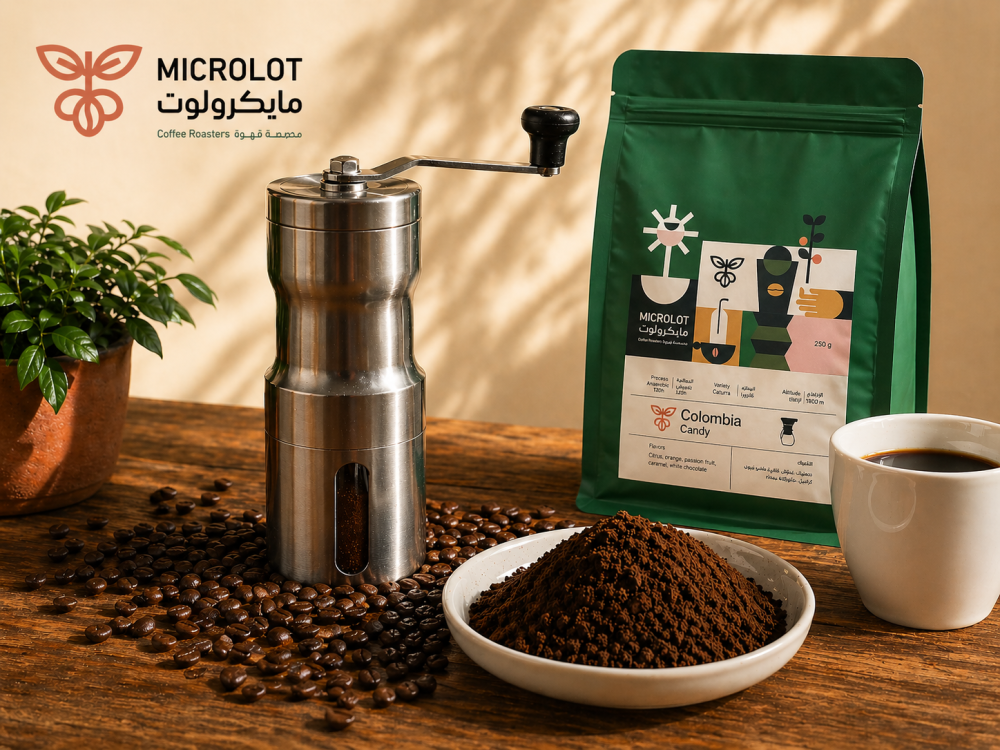
Grinding coffee fresh is a step many people overlook, thinking it's a luxury. How many times have you carefully chosen great beans, followed the perfect brewing steps, and still ended up with a flat, unclear cup? The problem isn't necessarily the beans or your technique; it may be that your coffee wasn't freshly ground.
What Is Freshly Ground Coffee?
Freshly ground coffee means grinding roasted beans just a few minutes before brewing, to preserve the aromatic compounds and natural oils that give coffee its full flavor and distinctive aroma, which start fading quickly once ground coffee is exposed to air.
Freshly Ground vs. Pre-Ground Coffee
Pre-ground coffee may seem convenient, but it loses its magic incredibly fast. Aromatic compounds evaporate, precious oils oxidize and lively flavors fade. That's why in this guide we'll explain why grinding fresh matters and how it affects flavor extraction. First, let's look at the chemistry of a coffee bean and what happens when you grind it.
Coffee Chemistry: The Aromatics and Oils Inside the Bean
Roasted coffee beans contain hundreds of chemical compounds that create the complex flavor and aroma we love. Coffee's signature taste comes from three main elements working in harmony:
- Volatile aromatic compounds: light molecules that escape into the air as soon as the bean's structure is broken, giving coffee the aroma you smell before the first sip.
- Coffee oils: fatty oils trapped inside the bean's cell walls that carry depth and body, giving the cup its richness on the palate.
- Organic acids: such as citric and malic acid, which give coffee its liveliness and brightness and balance sweetness and bitterness.
When a bean is ground, all three are released at once, so every second after grinding costs your cup some of its flavor.
Why Ground Coffee Loses Flavor
- Oxidation: grinding increases the surface area exposed to air, so oxygen reacts quickly with the coffee.
- Oils go stale fast: oxidized oils create a rancid taste, like old oil or stale nuts.
- Aromas disappear: the compounds responsible for coffee's aroma evaporate quickly after grinding.
- Flat, dull flavors appear: the breakdown of certain compounds causes papery or cardboard-like notes.
- Sweetness and liveliness fade: oxidation weakens natural sugars and desirable acids, making the taste more bitter or less balanced.
- Moisture: ground coffee easily absorbs humidity, diluting flavor and speeding up staling.
- CO2 loss: carbon dioxide escapes rapidly after grinding; it's linked to freshness and helps protect delicate aromas.
Why Grinding Fresh Matters for Perfect Extraction
The importance of freshly ground coffee goes beyond preserving aroma. Grinding plays a central role in extracting flavor into your cup, because it controls how water interacts with the coffee.
- More efficient extraction: fresh coffee particles absorb water more evenly, so flavors transfer to your cup more efficiently and predictably.
- Aromatics escape quickly: a bean contains hundreds of aromatic compounds that start evaporating the moment it's ground, and many are lost within minutes.
- CO2 protects flavor from oxidation: whole beans hold this gas inside as a natural barrier against oxygen, while pre-ground coffee loses it very quickly.
- Prevents rancid oils: natural oils give your cup depth and body, but once exposed to air after grinding they oxidize and taste stale.
- Precise particle size: grinding fresh lets you choose the right grind size for your method, controlling extraction speed and flavor balance.
Grind Sizes for Every Brewing Method
There's no single grind size for all coffee brewing methods. Espresso, pour-over, French press and moka pot each have different contact times, filters and pressure, so each needs a specific grind for ideal extraction.
What Is Extraction?
Extraction is the process of dissolving flavor compounds from ground coffee into water. There are three outcomes:
- Under-extraction: happens when the grind is too coarse for the method or the contact time is too short. Water passes too quickly to dissolve enough flavor. Result: sharply sour, salty, weak and thin coffee.
- Over-extraction: happens when the grind is too fine or contact time is too long. Water dissolves too many compounds, including undesirable ones. Result: bitter, dry (astringent) and harshly strong coffee.
- Ideal extraction: the precise balance where the right amount of desirable flavors (sugars, fruity acids, oils) is extracted without the bitter compounds. Result: balanced, sweet coffee with pleasant acidity, good body and clear, complex flavors.
The first key to controlling extraction is choosing the right grind size for your method:
- Espresso: very fine, like powdered sugar or fine salt. Extraction is very short (20–30 seconds) under high pressure, so a large surface area is needed. Precise grinding is critical for espresso. See the best espresso coffee beans.
- Pour-over (V60/Chemex): medium, like coarse sand or sea salt. Contact time is longer (2–4 minutes), and a medium grind lets water flow properly for balanced extraction. Here's our guide to the best grinder for V60.
- French press: very coarse, like breadcrumbs or coarse sea salt. Steeping is long (about 4 minutes) and the metal filter lets fine particles and oils through, so a coarse grind prevents over-extraction and reduces sediment.
- Moka pot: fairly fine, finer than pour-over but slightly coarser than espresso.
How to Tell If Your Grind Is Right
You don't need equipment; tasting is enough:
- Too bitter? Your grind is too fine. Go slightly coarser.
- Sour or watery? Your grind is too coarse. Go slightly finer.
- Balanced and enjoyable? You've arrived.
Quick Tips to Keep Your Coffee Fresh
- Grind only what you need for each brew.
- Store whole beans in an airtight container away from light and moisture.
- Don't store ground coffee; it loses much of its flavor within 15–30 minutes.
- Grind right before brewing, not an hour or a day before.
How to Choose the Right Coffee Grinder
Once you're convinced of the importance of grinding fresh, the next step is getting a grinder. It may seem like an extra investment, but it's arguably the most impactful upgrade for home coffee, possibly more important than the brewer itself. Not all grinders are equal, though.
Blade Grinders: Are They Enough?
Blade grinders are the cheapest and most common. A metal blade spins at high speed, like a small blender, chopping the beans into smaller pieces.
Pros: inexpensive, compact and fairly easy to use and clean.
Cons (and they're big!):
- Inconsistent grind: a random mix of fine dust and large chunks (fines and boulders), with no real control except run time, leading to uneven extraction (bitter and sour in the same cup).
- Heat: high-speed blades generate friction heat that can damage delicate aromatics before you even brew.
- Not suitable for espresso: it's impossible to get the fine, consistent grind espresso needs.
Verdict: better than coffee ground weeks ago, but not a good choice if you're serious about quality. Use it only as a temporary starting point and aim to upgrade to a burr grinder.
Burr Grinders: The Best Choice for Quality
Burr grinders use two burrs, one fixed and one rotating, made of ceramic or steel with sharp teeth. Beans pass between them and are crushed to an even size you control by adjusting the gap.
Pros:
- Very consistent grind: evenly sized particles for balanced extraction and cleaner, clearer flavors.
- Precise grind control: adjust from ultra-fine espresso to coarse French press.
- Less heat: slower rotation reduces heat and protects aromatics.
Cons: more expensive than blade grinders, and can be bulkier and more complex to clean (but worth it).
Verdict: a burr grinder is the highly recommended choice for serious coffee lovers and the real gateway to café-quality coffee at home. The difference in the cup is significant.
Conical vs. Flat Burrs
- Conical: a toothed outer ring with a cone-shaped inner burr. Usually slower, cooler and sometimes quieter. Common in home and hand grinders, with good particle distribution.
- Flat: two parallel toothed burrs, often found in commercial and high-end espresso grinders. Can be slightly more consistent at fine settings, but may spin faster and generate a bit more heat.
For home use, both can produce excellent results. Don't overthink it at first; focus on a well-built burr grinder with good reviews.
Manual or Electric?
Manual burr grinders
- Pros: portable and perfect for travel, no electricity needed, very quiet, often excellent grind quality for less money than comparable electric models, and a satisfying hands-on ritual.
- Cons: require effort and time (especially for larger amounts or fine espresso grinds), and capacity can be small.
- Ideal for: brewing one or two cups at a time, travelers, and anyone wanting top grind quality on a budget.
Electric burr grinders
- Pros: fast and convenient, handle larger quantities easily, ideal for daily use or brewing for family and guests, often with timers or programmed doses.
- Cons: more expensive, bulkier, need power and can be noisy.
- Ideal for: quick daily use, larger batches and espresso lovers (many electric grinders are designed for espresso).
Your choice depends on your budget, brewing habits and how much you value convenience versus portability. Either can be excellent as long as it's a quality burr grinder.
Practical Tips to Get the Most from Fresh Grinding
1. When to Grind: Right Before Brewing
The single most important tip: grind your coffee just moments before you start brewing. Don't grind in the morning for the afternoon, and don't grind enough for two or three days. The flavor countdown starts immediately after grinding.
The ideal routine: weigh the beans for your recipe, add them to the grinder, grind, and use the coffee immediately.
2. Store Whole Beans Properly
Since you're grinding fresh, you also need to keep your whole beans fresh for as long as possible after roasting.
- The enemies: air, moisture, heat and light.
- Airtight, opaque container: ceramic or stainless steel containers are ideal. The roaster's original bag can work short term if it has a one-way valve and zip seal.
- Cool, dark, dry place: a kitchen cupboard away from the oven, direct sunlight and moisture.
- Mostly avoid the fridge or freezer: condensation adds moisture and coffee absorbs food odors. The only exception is long-term freezing of large, unopened, fully sealed bags.
- Buy smaller amounts more often: enough for a week or two keeps your coffee close to its roast date.
3. Clean Your Grinder Regularly
Over time, coffee residue and oils build up inside your grinder, especially around the burrs. They can go rancid and spoil the flavor of fresh coffee, and heavy buildup can affect performance and consistency.
- Routine cleaning (every few days or weekly): brush away grounds from the chute and around the burrs, and empty and clean the grounds container.
- Deep cleaning (every few weeks or monthly): consider grinder-cleaning tablets that absorb oils and residue. If your grinder allows it, carefully remove the upper burr and brush both burrs clean. Don't use water on steel burrs unless the manual says so. A small air blower or vacuum helps remove fine dust.
A clean grinder means purer flavor, longer grinder life and consistent performance.
Grinding Fresh: The Foundation of Great Coffee
If you've read this far, you clearly take your coffee seriously. Grinding fresh isn't a small detail; it's a decisive factor that separates an ordinary cup from an exceptional one. Moving away from pre-ground coffee opens up a whole new world of flavor, aroma and control, letting you taste the true potential of the beans you chose. Investing in a good burr grinder is an investment in your daily coffee experience.
If you still rely on pre-ground coffee, take the next step: find a burr grinder that fits your budget, buy freshly roasted whole beans from a roaster you trust like Microlot, grind right before brewing, and notice the difference yourself. To pick the right beans, explore the best specialty coffee and learn what affects coffee flavor.
How to Grind Coffee at Home
If You Have a Coffee Grinder
- Add a small amount of beans to the grinder.
- Choose the right grind size for your brewing method.
- Grind in short bursts until you reach the right texture.
- Use the coffee immediately for the best flavor.
If You Don't Have a Grinder
- Use an alternative such as a mortar and pestle, a blender's spice mill or food processor, or a sealed bag with a rolling pin or heavy object.
- Grind small amounts at a time so the particles stay even.
- With a blender or food processor, use short pulses instead of running it continuously.
- With a mortar and pestle, crush first, then use a circular motion until you reach the desired grind.
- With a sealed bag, use a rolling pin, heavy pan or heavy bottle to press and roll over the beans gradually.
Downsides of grinding without a grinder: the grind may not be uniform, the beans can heat up if you grind too long, and it takes more time and effort.
How to improve results: grind small batches, use short pulses, shake the beans between rounds, sift out large pieces and regrind them, and always grind right before brewing.
Frequently Asked Questions
Is it really worth buying a grinder? Isn't roaster-ground coffee enough?
Yes, absolutely. Coffee loses much of its flavor and aroma within minutes of grinding. Even if the roaster grinds it for you, it will have lost a lot by the time you brew it hours or a day later. A grinder is the best investment for better coffee at home.
What's the main difference between a blade grinder and a burr grinder?
A blade grinder chops beans randomly with a fast-spinning blade, creating fine dust and large pieces and generating heat. A burr grinder crushes beans between two burrs into even, controllable particles with less heat, which is crucial for good extraction.
Can I grind enough coffee for a few days and store it?
It's not recommended. Ground coffee, even in an airtight container, oxidizes and loses aroma much faster than whole beans. The golden rule: grind only what you need right now.
Is a manual grinder as good as an electric one?
Yes. Many high-quality manual grinders with good burrs match or even beat electric grinders at a similar or slightly higher price. The choice mainly comes down to convenience, speed, budget and how much coffee you brew.
How much should I spend on a good grinder?
Prices vary widely. Good manual burr grinders start around $50 and go up to several hundred dollars, while good electric burr grinders usually start around $100–150 and rise with features and precision, especially for espresso. Invest in the best burr grinder you can afford; it's the foundation of your coffee.
Share Your Experience!
Do you use pre-ground coffee or grind your own? If you grind, which grinder do you use, and when did you notice the biggest difference in flavor? Share your story in the comments, and pass this guide on to friends who could benefit from it.
References
- Specialty Coffee Association (SCA): standards and protocols on coffee quality, including grinding and extraction (sca.coffee).
- Rao, Scott (2014). The Coffee Roaster's Companion: discusses coffee science and staling after roasting and grinding.
- James Hoffmann (YouTube and website): detailed videos and articles on coffee techniques, including grinder reviews and why to grind fresh.
- Barista Hustle: an educational platform with scientific and practical articles on extraction and grinding (baristahustle.com).