
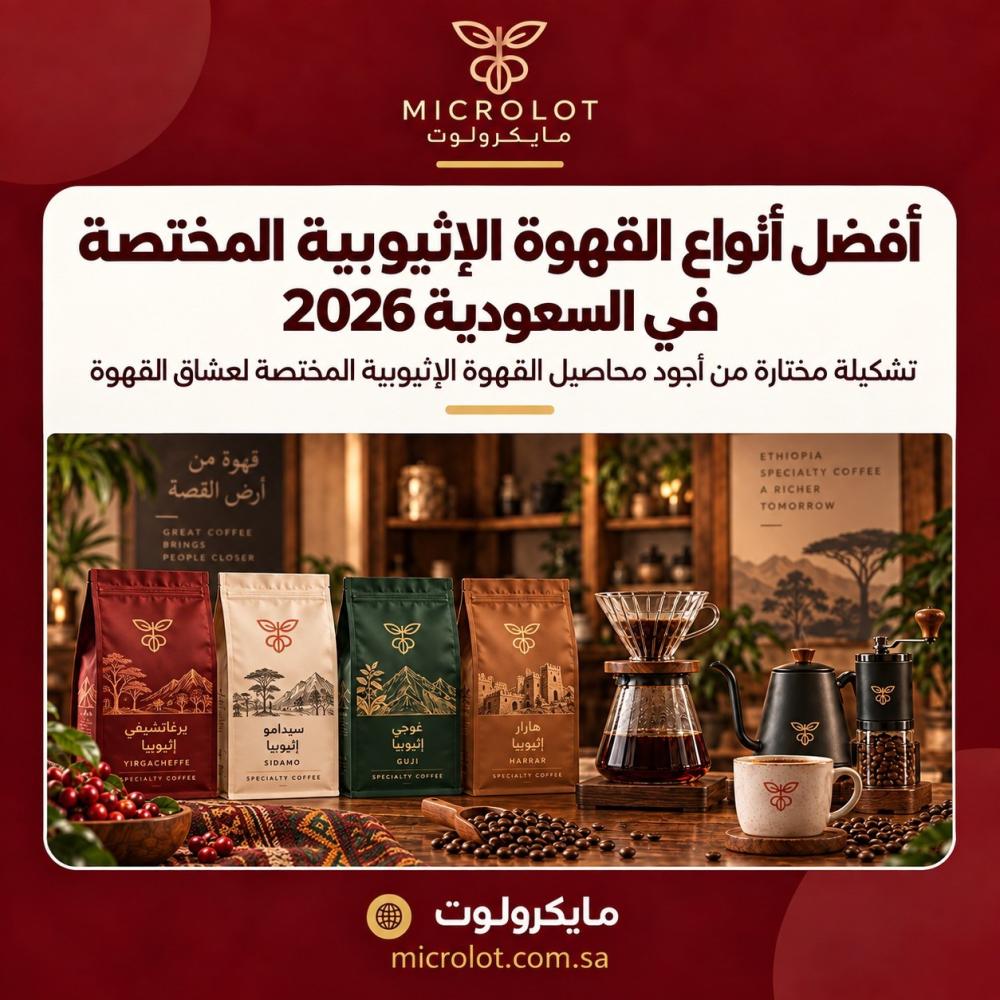
If you're looking for the best Ethiopian specialty coffee in Saudi Arabia, you'll find a wide world of floral and fruity flavors, citrus, berries, peach and mango. Microlot Roasters offers several Ethiopian coffees from regions such as Hambela, Guji, Yirgacheffe, Chelbesa and Shelshele, with natural and anaerobic processing suited to V60, espresso and other pour-over methods. Ethiopian coffee is generally known for its aromatic, fruity character and bright acidity, which varies by region and processing.
Buying any coffee labeled Ethiopia doesn't guarantee the same experience; Hambela, for example, differs from Guji Kurume or Yirgacheffe Aricha in tasting notes, body and processing. Knowing the best Ethiopian specialty coffees helps you choose one that suits your taste and brewing method rather than relying on the country name alone.
The Best Ethiopian Specialty Coffees
The best Ethiopian specialty coffees at Microlot Roasters include a range of options for lovers of fruity and floral flavors. Highlights include Ethiopia Hambela with notes of red fruit, mango, jasmine and peach, and Ethiopia Guji Kurume with a clear fruity character. This variety helps you choose the right coffee for your taste and brewing method, whether you prefer V60, manual pour-over or a cup with distinctive floral and fruity notes.
Ethiopia is famous for coffee regions such as Yirgacheffe, Sidamo, Harrar, Guji and Limu. Yirgacheffe tends toward florals, lemon and a tea-like character, Guji is often floral and fruity, and other Ethiopian coffees lean toward berries, peach, apricot and citrus. Common traits of Ethiopian coffee:
- Jasmine and florals.
- Berries, strawberry and grape.
- Mango, peach and apricot.
- Lemon and citrus.
- A tea-like character in some regions.
- Natural sweetness with a light to medium body, which can become fuller depending on processing.
Read Microlot's dedicated guide to Ethiopian coffee types to understand growing regions and the traits of each.
How to Choose the Best Ethiopian Coffee for Your Taste
Before buying, identify the flavors you prefer. If you lean toward mango, peach and florals, Hambela may suit you; if you love berries and grape, Guji Kurume is closer to your taste. For bolder tropical notes there's anaerobic Chelbesa, while Yirgacheffe Aricha blends apricot, mango, cherry and strawberry.
Processing also affects the result: natural processing tends to highlight fruitiness and sweetness more, while anaerobic processing can deliver bolder, more complex flavors. Learn more about coffee processing methods.
More Than 12 Ethiopian Products and Buying Options from Microlot
1. Ethiopia Hambela 250 g
One of Microlot's standout Ethiopian coffees. It comes from Hambela, Guji, at 2,000 meters, heirloom variety with natural processing, showing red fruit, mango, jasmine and peach. Its page notes it suits V60 and espresso. Hambela is one of the best choices for lovers of clear fruitiness with a rich body and medium acidity.
2. Ethiopia Hambela 1 kg
If you've already tried Hambela and drink it regularly, choose the larger size instead of small bags; it makes more sense for offices or high daily consumption. Hambela in 1 kg is also part of Microlot's Office Box.
3. Ethiopia Shelshele 250 g
Shelshele has a completely different personality: a naturally processed heirloom coffee grown at 2,000 meters, with notes of floral tea, wild berries and plum, a smooth body and clear sweetness. If you lean toward aromatic, tea-like cups, it's well worth trying.
4. Ethiopia Shelshele 1 kg
Shelshele is also available in larger sizes, ideal if it's become part of your daily routine. Microlot notes it suits V60 and espresso.
5. Ethiopia Chelbesa Anaerobic 250 g
Chelbesa has a bolder character. It comes from 2,200 meters, heirloom variety with anaerobic processing, with notes of florals, chocolate, apricot, pineapple and mango, and is recommended for V60. It's one of the best Ethiopian coffees for lovers of tropical fruit and complex, aromatic cups.
6. Ethiopia Guji Kurume 250 g
From the Guji highlands at 2,000 meters, heirloom variety with natural processing. It shows notes of blueberry, brown sugar, strawberry and grape, with a rich body and medium acidity. It's a great choice if you want clear fruitiness with smooth sweetness.
7. Guji Kurume in Larger Sizes
The Guji Kurume page offers different sizes, making it a good choice if you want more after trying the 250 g bag.
8. Ethiopia Yirgacheffe Aricha
A Microlot-category coffee grown at 2,100 meters, heirloom variety with anaerobic processing. Its notes include apricot, mango, cherry, strawberry and red berries, and it suits V60, Chemex and espresso. It stands out for lovers of complex, fruity flavors with a sweet finish.
9. Filter Coffee Box
If you want to try Hambela alongside other origins, the Filter Coffee Box includes 250 g of Ethiopia Hambela with Colombia El Puente and Uganda Mananasi. It's useful for beginners who want to compare Ethiopian coffee with others using the same pour-over method.
10. Elite Box
The Elite Box includes four coffees, among them 250 g of Ethiopia Hambela, alongside Colombia Huila, Passion Fruit and Colombia Grape, ideal for exploring Ethiopian coffee while comparing it with very different Colombian coffees.
11. Excellence Box
The Excellence Box includes 250 g of Ethiopia Guji Kurume along with Colombia Huila and Costa Rica Piedra Alta, ideal for comparing body and flavor across three origins in one session.
12. Office Box
The Office Box offers a 1 kg bag of Ethiopia Hambela alongside a 1 kg Colombian bag, with paper cups, designed for high consumption in the office.
13. Hambela in Pour-Over Boxes
Hambela appears repeatedly as a core coffee in Microlot's pour-over sets, making it a clear choice if you want to combine a fruity Ethiopian experience with coffees from other countries in one order. See our guide to coffee box deals in Saudi Arabia.
Quick Comparison of Popular Ethiopian Coffees
- Hambela: natural; mango, peach, jasmine, red fruit; V60 and espresso.
- Shelshele: natural; floral tea, wild berries, plum; V60 and espresso.
- Chelbesa: anaerobic; apricot, pineapple, mango, florals; V60.
- Guji Kurume: natural; blueberry, strawberry, grape, brown sugar; V60 and espresso.
- Yirgacheffe Aricha: anaerobic; apricot, mango, cherry, strawberry; V60, Chemex and espresso.
The biggest differences don't come from the name Ethiopia alone, but from region, processing, variety and tasting notes.
What's the Best Ethiopian Coffee for V60?
V60 is one of the best ways to reveal Ethiopian coffee's aromatic details, highlighting florals, fruit and acidity clearly. For V60, compare Chelbesa for mango and pineapple, Hambela for peach and jasmine, Guji Kurume for berries and grape, and Yirgacheffe Aricha for apricot and cherry.
Read our guide to the best coffee for V60 before choosing your coffee.
Is Ethiopian Coffee Good for Espresso?
Yes, but not every coffee gives the same result. Hambela, Shelshele and Guji Kurume can be used for espresso as well as V60, while results depend on grind, recipe and roast. The best Ethiopian coffee for espresso is the one that suits your taste; some want concentrated fruitiness, others prefer a calmer cup.
For more, see our guide to the best espresso coffee beans in Saudi Arabia.
Natural or Anaerobic: Which Is Better?
Natural processing, as in Hambela, Shelshele and Guji Kurume, tends to highlight sweetness, ripe fruit and body. Anaerobic processing, as in Chelbesa and Yirgacheffe Aricha, can give more complexity and bolder fruity notes. No processing is best for everyone; the best is what matches your taste.
What Suits the Saudi Market?
With V60, espresso and iced pour-over popular in Saudi Arabia, Ethiopian coffees suit many occasions. For daily morning coffee, try Guji Kurume or Hambela; Chelbesa suits fruity summer cups; and lovers of special experiences can choose Yirgacheffe Aricha.
Microlot is a Saudi roastery delivering across the Kingdom, with coffees from farms worldwide and grind options for every brewing method.
Buying Ethiopian Coffee for the First Time
Don't start with a kilo of a coffee you haven't tried:
- Choose 250 g.
- Identify the flavors you prefer.
- Read the processing type.
- Check the right brewing method.
- Use the same recipe when comparing two coffees.
- Try hot and iced if you use V60.
- Move to a larger size once you're sure the coffee suits you.
Also follow Microlot's current offers when buying several coffees or a box.
Choosing the best Ethiopian specialty coffee in Saudi Arabia depends on the flavors you want and your preferred brewing method. Hambela combines mango, peach and jasmine; Shelshele offers florals with berries and plum; Guji Kurume leans toward berries and grape; Chelbesa is more tropical; and Yirgacheffe Aricha offers a complex, rich microlot experience.
Microlot gives you options from small bags to larger sizes and boxes, so start with a limited trial, then compare processing, notes and body before buying more. Comparing origins? Read Colombian vs. Ethiopian coffee.
Frequently Asked Questions
Which is better, Hambela or Guji Kurume?
Hambela offers mango, peach and jasmine, while Guji Kurume leans toward blueberry, strawberry and grape. The choice depends on the flavors you prefer.
Is there a box with Ethiopian coffee?
Yes. Several boxes include Ethiopian coffees, such as the Filter Box with Hambela, the Excellence Box with Guji Kurume, and the Elite and Office Boxes, which include Hambela.