
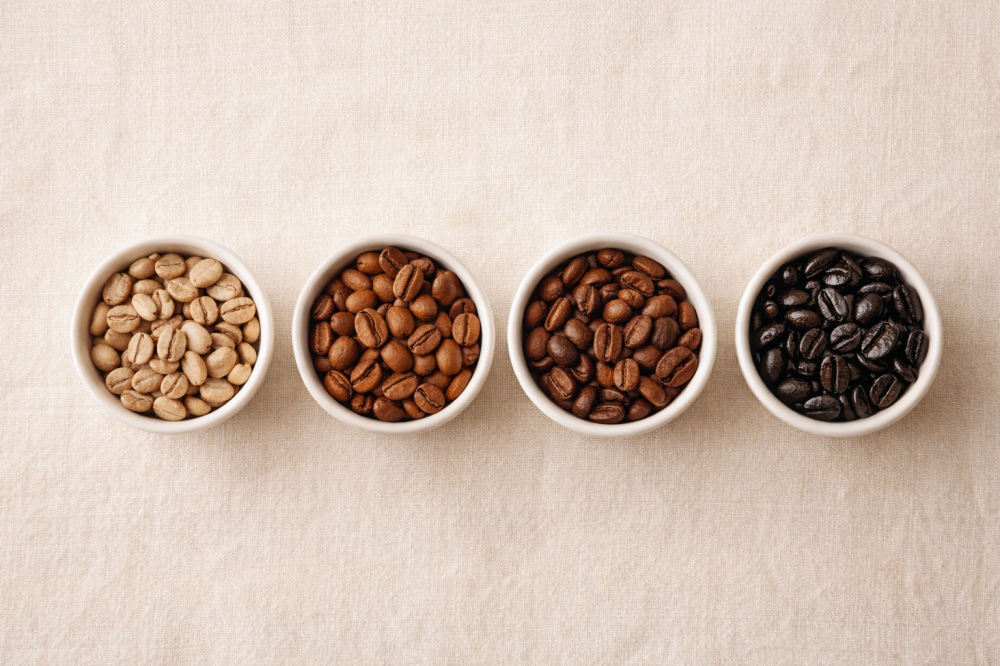
The roast level is the real secret behind every cup of coffee you drink. Whether you love the bright acidity of a light roast or the deep chocolate intensity of a dark roast, everything begins at the moment of roasting. In this guide, you'll learn the difference between each roast level, how it affects the appearance of the beans, the flavor, and the caffeine content so you can choose what's right for you and your preferred brewing method.
This comprehensive guide takes you on an enjoyable journey through the world of coffee roasting — from understanding the process itself and why it matters, to diving into the details of each major roast level: light, medium, medium-dark, and dark. We'll also explore the other factors that interact with roasting to shape your final experience, and give you practical tips for choosing your ideal roast. Get ready to become a more informed coffee drinker.
What Is Coffee Roasting and Why Does It Matter?
Coffee roasting is the process of applying heat to green coffee beans to transform them into the aromatic brown beans we know and love. It sounds simple, but it's actually a complex dance between heat, time, and airflow — controlled by the roaster's skill to determine the final flavor in your cup.
In their natural state, green coffee beans are dense, with a grassy or bean-like smell that carries none of the familiar coffee flavors. They're like a blank canvas waiting for the artist — the roaster — to work their craft. During the roasting process, a remarkable series of physical and chemical changes unfold:
- Moisture loss: The first thing that happens is the evaporation of water trapped inside the beans, making them lighter in weight
- Color change: Beans shift from green to yellow, then through various shades of brown, all the way to near-black at extreme roast levels
- Expansion and cracking: Beans expand and become less dense; at around 196–205°C, the "First Crack" occurs — a popcorn-like sound caused by expanding beans releasing steam and CO₂, marking the beginning of light roast territory
- Flavor and aroma development: This is where the real magic happens — complex chemical reactions like the Maillard Reaction (responsible for brown color and nutty/toasty notes) and Caramelization (converting sugars into caramel, adding sweetness and depth) create hundreds of aromatic compounds
- Oil migration: As roasting continues and heat increases, the natural oils inside the beans migrate to the surface, giving darker roasts their characteristic glossy appearance
- Second Crack: At higher temperatures (around 224–230°C), a second crack occurs — lighter and faster than the first — signaling the start of dark roast territory, where the bean structure begins to break down further and flavors become more intense and smoky
What Does a Professional Roaster Aim For?
A skilled roastery targets a precise balance throughout this complex process:
- Developing latent flavors: Bringing out the best of the bean's origin, variety, and processing method
- Hitting the target roast level: Reaching the desired color and temperature profile (light, medium, dark) that defines the cup's character
- Ensuring consistency: Roasting every batch the same way to deliver reliable, repeatable results
The Four Main Coffee Roast Levels
The four main coffee roast levels each give the cup a completely different character in terms of flavor, aroma, body, and caffeine content. Light roast (196–205°C) preserves the bean's original flavors — citrus, florals — with the highest caffeine content and a tea-like body. Medium roast (210–220°C) strikes the perfect balance between origin character and caramel/nutty roast notes, and is the most popular choice for most palates. Medium-dark roast (225–230°C) highlights dark chocolate and cocoa notes with a heavier body and low acidity, making it ideal for espresso lovers. Dark roast (above 235°C) is dominated by bitterness and heavy smoky flavors with the lowest caffeine content, as the bean's original origin characteristics disappear almost entirely.
- Light roast: Bright acidity, light body, higher caffeine, floral and citrus notes
- Medium roast: Perfect balance, caramel and nuts, suits all tastes
- Medium-dark roast: Dark chocolate, heavy body, ideal for espresso
- Dark roast: Clear bitterness, smoky flavors, lower caffeine, very thick body
Light Roast: The Brightness of Origin, the Purity of Flavor
Imagine a coffee that retains most of its original personality — bright, lively, revealing delicate details about where it was grown. That's the world of light roast. Roasting is stopped here before or right at the First Crack (typically between 196–205°C).
Appearance & Aroma
Light roast beans are light brown, bordering on beige or cinnamon, with a completely dry surface — no trace of oils. The aroma can be floral and fragrant, fruity and refreshing (like citrus or berries), or slightly herbal, with a light hint of toasted bread.
Flavor: Bright Acidity and Light Body
This is where coffee acidity truly shines. By acidity, we don't mean an unpleasant sourness — we mean that bright, lively quality that reminds you of fruit and makes the coffee refreshing (think lemon or green apple). The body is typically light, more like tea than a thick, heavy drink. The dominant flavors are those tied to the bean's origin and processing method — you may clearly taste floral notes, citrus, berries, or other fruits. Sweetness is present but delicate, and bitterness is nearly nonexistent.
Common Names & Caffeine
You may find light roast under names like:
- Cinnamon Roast
- New England Roast
- Half City
- Light City
The caffeine myth: Many people believe dark roast has more caffeine because of its bold flavor. The truth is the opposite. Light roast beans retain a slightly higher caffeine content because caffeine degrades slightly with increased roasting time and temperature. The difference isn't dramatic, but it's real. If you're looking for an extra energy boost, light roast is your choice.
Who Is Light Roast For?
Coffee lovers who appreciate subtle, complex flavors, enjoy bright acidity, and want to taste the unique characteristics of the bean's origin. It's ideal for filter brewing methods like V60 and Chemex that highlight this clarity — and it's the go-to choice in the specialty coffee world for showcasing the quality of the harvest.
Medium Roast: The Perfect Balance
This is the sweet spot where many coffee lovers find their equilibrium. Medium roast is stopped after the First Crack and before the Second Crack (typically between 210–220°C).
Appearance & Aroma
Medium roast beans have a richer, warmer brown color than light roast — think milk chocolate. The surface is still mostly dry, though a very faint sheen may occasionally appear. The aroma becomes stronger and more layered, balancing the original fruity/floral notes with developing roast characteristics like toasted nuts, caramel, and chocolate.
Flavor: Balanced Sweetness and Fuller Body
Medium roast is known for its wonderful balance. The acidity is still present but more moderate and gentle compared to light roast. The body becomes fuller and richer. Sweetness steps forward more prominently — caramel, nut, and chocolate flavors become clearly noticeable, while the sharper floral and fruity notes soften in favor of a more well-rounded profile. Bitterness begins to appear very subtly, adding depth without overwhelming.
Common Names & Broad Appeal
Popular names for medium roast include:
- American Roast
- City Roast
- City+ Roast
- Breakfast Roast
Medium roast is the most widely consumed roast level in the world, particularly in the United States. It offers a balanced, satisfying experience for most palates and is highly versatile — suitable for filter brewing, drip machines, and even some espresso blends seeking balance.
Caffeine: Slightly lower than light roast, but still higher than dark.
Who Is Medium Roast For?
Anyone seeking a balanced cup that combines some origin character with comforting roast flavors. If you find light roast too acidic and dark roast too bitter, medium roast is your ideal starting point.
Medium-Dark Roast: Where Boldness Begins
We now enter a richer, more intense stage where roast flavors begin to dominate over origin characteristics. Roasting stops at the beginning or middle of the Second Crack (typically between 225–230°C).
Appearance & Aroma: An Oily Touch and Richer Flavors
The beans take on a rich, deep brown color, and a light-to-moderate oily sheen often appears on the surface as internal oils migrate outward under high heat. The aroma becomes more powerful and dense — dark chocolate, cocoa, slightly charred caramel, and possibly faint smoky hints. The original fruity and floral notes of the bean become very faint or disappear entirely.
Flavor: Heavier Body and Lower Acidity
The body becomes noticeably heavy and full. Acidity drops significantly — nearly negligible or very low. Sweetness tends toward dark caramel or molasses. Bitterness becomes more apparent, but typically remains balanced and palatable — like the bitterness of dark chocolate rather than something harsh. The dominant flavors are those produced by the roasting process itself.
Common Names & Espresso Suitability
Well-known names for this roast include:
- Full City Roast
- Full City+ Roast
- Vienna Roast (sometimes falls between medium-dark and dark)
Medium-dark roast is an extremely popular choice for espresso. Its heavy body, low acidity, and rich chocolate-caramel flavors make it ideal for producing a concentrated, balanced espresso shot — and a wonderful base for milk drinks like lattes and cappuccinos. For many who prefer the classic taste, it's simply the best roast for espresso.
Caffeine: Continues to decline compared to lighter roasts.
Who Is Medium-Dark Roast For?
Coffee lovers who want bold, rich flavor, a full body, and prefer mild bitterness with low acidity. Perfect for espresso enthusiasts, milk-based drink lovers, and anyone who enjoys a strong morning cup.
Dark Roast: Intensity and Boldness You Can't Miss
We arrive at the far end of the roast spectrum, where the roasting process itself takes nearly complete center stage. Roasting stops after the Second Crack (typically above 235°C, sometimes reaching 245°C or more). This stage requires extreme care from the roaster to avoid burning the beans entirely.
Appearance & Aroma: Oily Sheen and Smoky Notes
Dark roast beans are very deep brown, nearly black, with a surface visibly slick with oil. The aroma is very strong and dense — dominated by deep roast characteristics: smoke, occasional char notes, very bitter chocolate, burnt spices, and perhaps a touch of dark molasses sweetness. Original origin characteristics have almost completely disappeared.
Flavor: Clear Bitterness and Dense Body
The body is at its maximum density and heaviness. Acidity is completely absent. Sweetness is minimal or nonexistent — whatever appears resembles burnt sugar. Bitterness is the dominant flavor, present and strong. A skilled roaster aims for a "clean" acceptable bitterness — like very dark chocolate — rather than the sharp, acrid bitterness of over-roasted beans.
Common Names & The Caffeine Myth
Dark roast goes by names like:
- French Roast
- Italian Roast
- Espresso Roast (though many modern specialty roasters use lighter profiles for espresso)
- Spanish Roast (the darkest of all, bordering on charred)
The caffeine myth revisited: Contrary to the popular belief that "strong" (dark) coffee has more caffeine, dark roast actually contains the least caffeine of all roast levels. The high heat and extended roasting time cause a greater proportion of caffeine to degrade.
Who Is Dark Roast For?
Those who love very bold, intense, clearly bitter flavors — people who want coffee that "hits hard" without worrying about origin complexity. It remains popular in some traditional coffee cultures and as the base for very classic espresso blends, or for brewed coffee that needs to hold up against heavy dilution with milk and sugar. In the specialty coffee world, however, it's often seen as masking the bean's inherent quality.
Beyond Roast Levels: The Roast Profile
The Art Behind the Cup
The final roast level is only part of the story. The roast profile is the complete path the roaster takes to reach that final point — specifically, how heat is applied over time.
- Fast roasting (high heat): Tends to preserve brighter acidity and sharper fruit flavors
- Slow roasting (lower heat): Tends to develop deeper sweetness and a fuller body
Professional roasters design a different profile for each coffee variety based on bean density, moisture content, and the desired flavor characteristics. That's why you may notice subtle flavor differences between the same roast level from two different roasters — proof that roasting is a science and a craft that goes far beyond final color.
Quick Summary: Key Takeaways on Coffee Roast Levels
- Roasting transforms green beans through a complex artistic and chemical process that unlocks flavors and aromas
- Four main levels: Light (bright, acidic, clear origin), Medium (balanced, sweet, popular), Medium-Dark (rich, heavy body, mild bitterness), Dark (intense, smoky, clear bitterness)
- It's not just color: Bean origin, processing method, and roast profile all significantly affect final flavor
- Caffeine and roasting: Light roast has the highest caffeine (by a small margin), dark roast has the least
- Your choice depends on you: Consider your flavor preferences and brewing method when choosing
- Experience is key: The best way to discover what you love is to try different origins and roast levels
- No "best" roast exists: The best one is simply what suits your personal taste and gives you the cup you enjoy most
Conclusion: Your Flavor Journey Starts Now
You're now equipped with the knowledge to explore the world of coffee roasting with greater confidence. You're no longer just a consumer — you're an informed explorer, capable of identifying the roast level that suits you and appreciating the art and science behind every cup.
Next time you buy coffee, look beyond the brand name. Read about the roast level, the origin, the expected flavor notes. Don't be afraid to try something new. Whether you prefer the brightness of a light roast, the depth of a dark roast, or the perfect balance of a medium roast — the world of coffee is waiting for you to discover its treasures.
Explore our carefully curated selection of specialty coffee beans roasted to different levels to find your perfect morning companion.
Frequently Asked Questions
Does dark roast mean stronger coffee?
If by "stronger" you mean more bitter and intense, yes. If you mean higher caffeine, no. Dark roast actually contains slightly less caffeine than light roast. The relationship between caffeine content and roast level is a mild inverse one.
What is the best roast level for espresso?
Traditionally, medium-dark or dark roast is preferred for classic espresso due to its rich flavor, heavy body, and ability to stand up to milk. In modern specialty coffee, however, medium roast has become very popular for espresso, offering greater sweetness and complexity. The best roast for espresso ultimately depends on your taste and the drink you're making.
How do I know the roast level when buying coffee?
Most specialty roasters clearly state the roast level on the packaging (light, medium, dark — or common names like City, Full City). Bean color is also a good indicator: light roast is dry and pale brown; dark roast is oily and nearly black. Reading the flavor descriptions can also help — fruity notes suggest light roast; chocolate and smoky notes suggest dark.
Does roasting affect coffee acidity?
Yes, significantly. Light roast preserves the highest level of bright, desirable acidity. As roast level increases (darker), acidity drops noticeably. The effect of roast level on coffee acidity is one of the primary differences between roast degrees.
What's the difference between French and Italian Roast?
Both fall in the very dark roast category. French Roast is typically very dark and oily with smoky, bitter notes. Italian Roast is generally darker still — nearly black — with sharper bitterness and a strong carbon-like flavor. Both completely mask the bean's origin characteristics.