
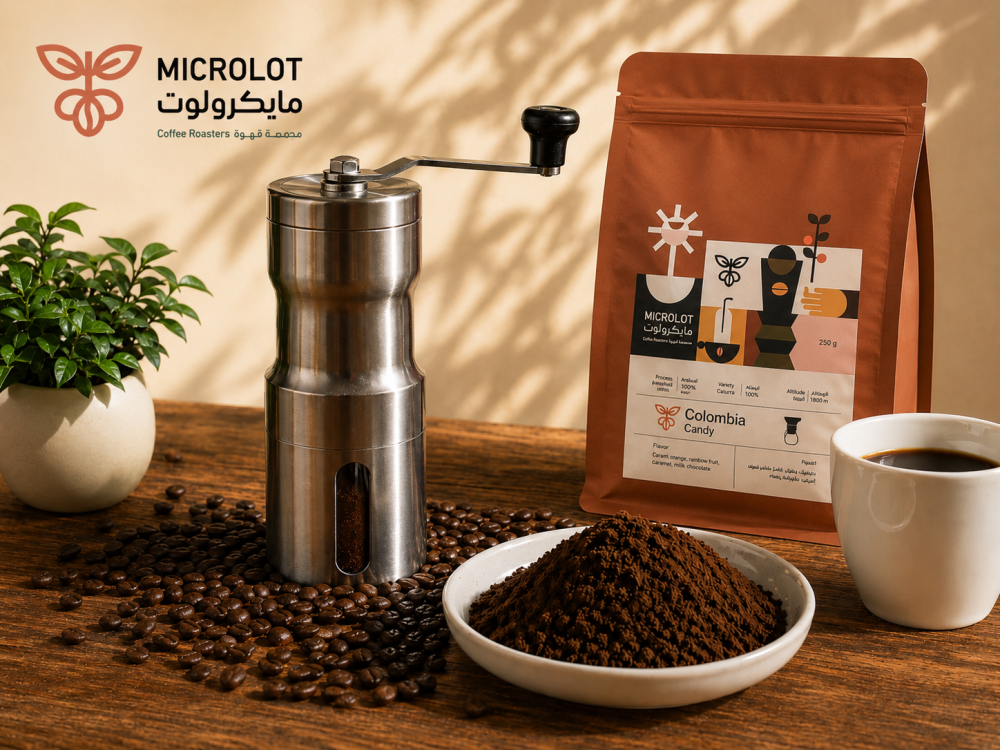
Specialty coffee brewing tools have become an essential part of the coffee experience in Saudi Arabia, whether you brew at home, at the office, at a weekend retreat or while traveling. Microlot Specialty Coffee Roasters offers a wide range of coffees and tools that help coffee lovers brew a balanced cup with V60, Chemex, AeroPress and French press.
A great cup doesn't depend on the beans alone. Your brewing tools affect grind size, water amount, temperature and extraction time. Choosing the right equipment and using it thoughtfully brings out the flavors in the coffee and reduces unwanted bitterness or sourness.
What Are Specialty Coffee Brewing Tools?
They're the equipment and accessories used to grind, weigh, extract and serve coffee according to a specific recipe, including a grinder, digital scale, kettle, brewer, filters, server and cups, as well as cleaning and storage accessories.
The right tools depend on the drink you want. Lovers of clean coffee may prefer V60 or Chemex, while the French press suits those looking for a fuller body. AeroPress is easy to use and carry, while espresso requires a machine and grinder with a higher level of precision.
These tools help you control the most important brewing variables:
- The amount of coffee used.
- Grind size and consistency.
- Coffee-to-water ratio.
- Water temperature.
- Brewing and extraction time.
- Pouring speed and distribution.
- Filter type.
- Water quality and composition.
Why Brewing Tools Matter in Saudi Arabia
Specialty coffee culture has spread widely in Saudi Arabia, and many consumers now care about a coffee's origin, roast level, processing method and tasting notes. With this interest, home brewing is no longer guesswork; it's an experience you can measure and improve.
The right tools help you:
- Get clear, balanced flavor.
- Discover the differences between coffees and growing regions.
- Reduce wasted coffee and water.
- Repeat your favorite recipe every time.
- Control the strength and body of your drink.
- Brew consistent coffee at home or at work.
- Try several methods with the same coffee.
- Develop your brewing skills gradually.
Coffee gear fits everyday life in the Kingdom: you can set up a small corner at home or keep portable tools for the office, trips and weekend getaways.
How to Choose the Right Specialty Coffee Brewing Tools
Before buying anything, identify the kind of coffee you drink most. A V60 user doesn't need the same equipment as an espresso lover, and someone brewing one cup a day may not need a large electric grinder.
Browse Microlot's specialty coffee tools to see what's available, then compare options based on these factors:
Your Preferred Brewing Method
If you like clean coffee that shows off fruity and floral notes, start with a V60. Chemex suits brewing several cups with a light, clean body. French press offers a full body, while AeroPress is flexible and easy to clean.
Number of Cups
Choose the brewer size based on how many people you brew for. There are small sizes for one cup and larger ones for family or guests, and the right size helps you use the right amount of coffee and water.
Budget
You don't need to buy everything at once. Start with a hand grinder, a scale and a pour-over brewer, then add an electric kettle or a better grinder as you gain experience.
Ease of Use and Cleaning
Some methods need more practice, while others are simple. Choose a brewer that's easy to take apart and clean, especially if you brew daily.
Electrical Compatibility
When buying an electric grinder or kettle locally or from an international store, check that it's compatible with Saudi power and plugs, and that warranty and spare parts are available.
Essential Specialty Coffee Brewing Tools
A beginner can build a practical coffee corner with a few tools and expand gradually. The essentials include:
- A consistent coffee grinder.
- A digital scale with a timer.
- A suitable kettle.
- A brewer such as V60 or Chemex.
- Compatible filters.
- A server or carafe.
- An airtight container for beans.
- A brush and cleaning supplies.
- Cups that suit your drink size.
- Fresh coffee beans suited to your brewing method.
More equipment doesn't necessarily mean better coffee; understanding your tools and dialing in your recipe matter more than owning lots of accessories you rarely use. Planning your setup? See our guides to specialty coffee equipment prices and buying specialty coffee tools online.
The Grinder: The Most Important Brewing Tool
The grinder directly affects extraction quality. When particles aren't uniform, fine particles extract quickly while coarse ones need longer, so bitterness and sourness show up in the same cup.
That's why a grinder that delivers a consistent grind is a key investment. Choose one with conical or flat burrs rather than a blade grinder that chops beans unevenly. Learn why freshly ground coffee matters.
Hand Grinders
Hand grinders suit beginners and anyone brewing one or two cups a day. They're practical for travel and the office and need no electricity. Quality varies with burr material and grind adjustment precision.
Electric Grinders
Electric grinders are faster and suit frequent use, families and anyone who enjoys trying different recipes. Check the number of grind settings, ease of cleaning, noise level and warranty availability in the Kingdom. Here's our guide to the best grinder for V60.
Recommended Grind Sizes
- Coarse for French press.
- Medium-coarse for Chemex.
- Medium for most V60 recipes.
- Medium-fine for AeroPress.
- Fine and consistent for espresso.
Grind your coffee right before brewing, since it starts losing aromatic compounds after grinding.
The Digital Scale
A scale keeps your coffee-to-water ratio consistent instead of relying on spoons or guesswork. Choose a responsive scale that measures to 0.1 g and has a timer to track extraction time.
Start with 1 g of coffee for every 15–16 g of water. For example, use 20 g of coffee with 300–320 g of water, then adjust to taste.
If the cup is too light, increase the coffee or reduce the water. If it's too strong, reduce the dose or add a little water.
The Kettle
A regular kettle works for immersion methods such as French press, but a gooseneck kettle gives you better control for pour-over. Its spout helps direct the water and control pouring speed and distribution over the coffee bed.
Electric kettles with temperature control are available, as are stovetop kettles you can use with a separate thermometer. Brewing temperature usually ranges from 90–96°C, adjusted for the coffee and roast level.
Light roasts may need relatively higher temperatures, while dark roasts can be brewed cooler to avoid excess bitterness. Without a temperature-controlled kettle, let the water rest briefly after boiling before you brew.
V60: One of the Most Popular Brewing Tools
V60 is one of the most popular pour-over methods among coffee lovers in Saudi Arabia. Its cone shape and large bottom opening let you control extraction through grind size, pouring speed and number of pours. For bean ideas, see the best coffee for V60.
A starter V60 recipe:
- Heat the water to the right temperature.
- Place the paper filter in the brewer.
- Rinse the filter with hot water.
- Discard the rinse water.
- Add 20 g of medium-ground coffee.
- Pour 40–60 g of water for the bloom.
- Wait 30–45 seconds.
- Continue pouring in stages up to 300 g.
- Aim for a total time of 2:30–3:30 minutes.
If the water drains quickly and the cup tastes thin and sour, grind finer. If it drains slowly and tastes bitter or dry, grind coarser.
For brewing on the go, the V60 travel coffee bag keeps your pour-over gear organized on trips. Learn more in our V60 travel bag guide or explore a complete V60 coffee kit.
Chemex
Chemex combines the brewer and serving carafe, ideal for brewing more than one cup. Its thick filters trap more oils and sediment, producing clean, light-bodied coffee.
Use a medium to slightly coarse grind and pour water gradually. A fine grind or very slow pour can lengthen extraction and create dry or bitter flavors.
Its glass design looks elegant in a home coffee corner, but it needs careful washing and storage to avoid breakage.
AeroPress: A Great Travel Brewer
AeroPress is compact and easy to clean, making it ideal for the office, travel or trips within the Kingdom. You can brew with many different recipes and grind sizes.
It works by steeping coffee for a set time, then pushing the water through a filter with hand pressure. You can use the standard or inverted method and adjust dose, temperature and time for a light or concentrated cup.
Although it can produce a concentrated drink, the result isn't true espresso, since hand pressure is lower than an espresso machine's.
French Press
The French press is a great option for those who prefer a full-bodied coffee with more natural oils. Coffee steeps in water, then a metal filter separates the grounds.
Use a coarse grind, add water in the right ratio and let it steep for about four minutes. Then press the plunger gently and serve immediately.
Don't leave the coffee in the press after plunging, as continued contact with the grounds increases extraction and bitterness. Clean the metal filter thoroughly to prevent oil buildup.
See our guide to specialty coffee brewing methods for the tools and steps for each method.
Espresso Equipment
Espresso requires more precision, since extraction happens under pressure in a short time. You'll need a machine with stable temperature and pressure and a grinder that allows small adjustments. For beans, see the best espresso coffee beans.
Useful espresso accessories include:
- A filter basket suited to your dose.
- A tamper that fits the basket.
- A distribution tool.
- A small, responsive scale.
- A milk frothing pitcher.
- A knock box for spent pucks.
- A group head cleaning brush.
- Machine cleaning products.
Start with 18 g of coffee to produce about 36 g of espresso in 25–30 seconds, then adjust the grind. If the shot runs fast, grind finer; if it's too slow, grind coarser.
Choosing Brewing Tools by Budget
You don't need the most expensive gear for good results; build a balanced setup based on your experience and budget.
Budget Starter Setup
- A consistent hand grinder.
- A digital scale with a timer.
- A plastic V60.
- Compatible paper filters.
- A simple kettle.
- An airtight coffee container.
Mid-Range Setup
- A multi-setting electric grinder.
- A temperature-control electric kettle.
- A faster, more precise scale.
- V60 plus Chemex or AeroPress.
- A glass server and suitable cups.
Advanced Setup
- A professional grinder.
- A temperature-stable espresso machine.
- A dedicated espresso scale.
- Precise distribution and tamping tools.
- Milk steaming equipment.
- Complete cleaning and maintenance tools.
Start with the tools you'll use every day, then add new equipment when you want to try a different method or improve a specific part of your brewing.
Choosing the Right Beans for Your Brewing Method
Results don't depend on tools alone; choose a coffee that suits your method and preferred flavors. Browse Microlot's selected coffees for beans suited to pour-over and espresso.
Some coffees have fruity and floral notes that shine with V60 and Chemex, while others offer chocolate, caramel and nutty notes that suit espresso and milk drinks.
When choosing a coffee, pay attention to:
- Country and growing region.
- Processing method.
- Roast level.
- Tasting notes.
- Recommended brewing method.
- Roast date.
- Required grind size.
You can also browse all specialty coffees to compare options and find one that suits your taste.
How to Use Your Brewing Tools Correctly
Following consistent steps helps you repeat results and improve your recipe:
- Choose a coffee that suits your brewing method.
- Use freshly roasted beans whenever possible.
- Store coffee in an airtight container.
- Weigh the beans you need.
- Grind right before brewing.
- Preheat the brewer and cup and rinse the filter.
- Set the water temperature.
- Start the timer with your first pour.
- Pour evenly.
- Record the dose, grind, time and result.
- Taste the coffee once it cools slightly.
- Change only one variable next time.
Recording recipes is important, especially when trying different coffees, as each may need small changes in grind, temperature or extraction time.
Common Brewing Mistakes
Some habits lead to poor results even with good equipment:
- Keeping coffee ground for a long time.
- Using the wrong grind size.
- Not weighing coffee and water.
- Skipping the filter rinse.
- Using very hot water for every coffee.
- Pouring too fast or unevenly.
- Leaving coffee in the French press after brewing.
- Neglecting to clean the grinder and filters.
- Changing several variables at once.
- Using water with a noticeable smell or taste.
- Buying lots of gear before learning the basics.
If the coffee tastes sharply sour and thin, it may be under-extracted: grind finer, extend brewing time or raise the water temperature slightly. If it tastes bitter and dry, it may be over-extracted: grind coarser or reduce temperature and time.
Cleaning Your Tools and Storing Coffee in the Saudi Climate
Coffee equipment needs regular cleaning to prevent oil and residue buildup. Wash your brewer and server after every use, and clean your grinder with a suitable brush without getting water inside.
Descale kettles and espresso machines according to the manufacturer's instructions, especially if your water is high in minerals.
Because temperatures are high in many parts of the Kingdom, keep your beans away from sun, heat and humidity. Store the bag in a cupboard at moderate temperature, and don't leave it in the car or near the oven.
Buy amounts you can finish within a reasonable time rather than storing large quantities. Check out the latest specialty coffees to see new arrivals in the store.
Summary: The Best Specialty Coffee Brewing Tools in Saudi Arabia
The right equipment depends on your favorite brewing method, number of cups, budget and experience. Beginners can start with a good grinder, a digital scale and a V60, then build their setup gradually.
Microlot is a Saudi specialty coffee roaster offering coffees and tools for many brewing methods. Don't just look for the most expensive tool; choose practical equipment that fits your needs, record your recipes and keep your tools clean for a balanced cup every time.
Start setting up your coffee corner, then explore the Microlot store at Microlot to choose coffees and accessories for your favorite brew.
Frequently Asked Questions
Can I use one grinder for pour-over and espresso?
Yes, if the grinder supports a wide range of settings, but espresso needs fine adjustments. A dedicated espresso grinder may be better if you brew espresso often.
How should I store coffee beans in Saudi Arabia?
Keep beans in an airtight container away from heat, humidity and direct light. Avoid placing them near the oven or leaving them in the car, and grind only what you need right before brewing.